

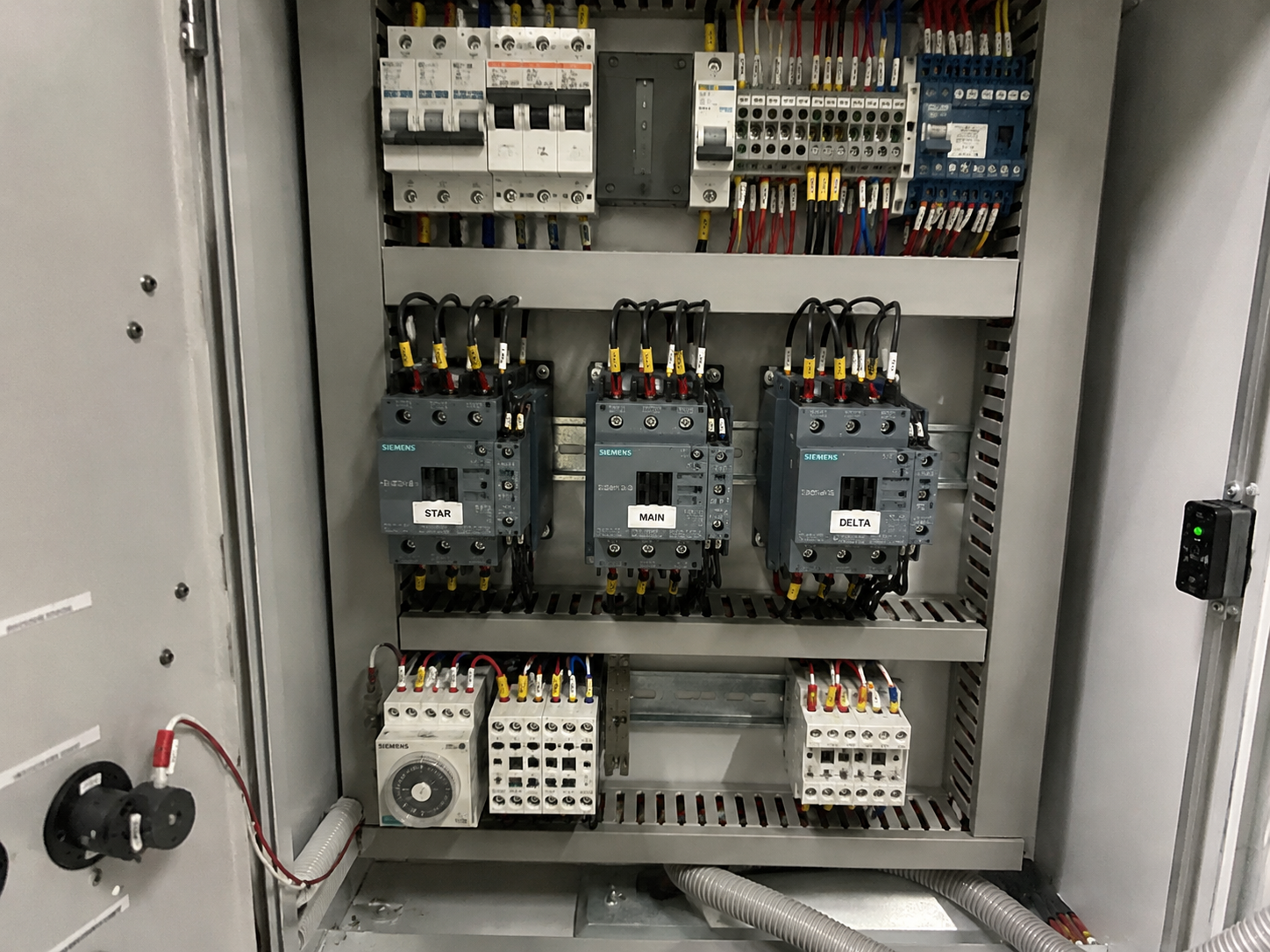

“Explain a star-delta starter — and how you’d fault-find one.” The examiner is testing two things at once: do you know why it exists, and can you work a problem in order? Here is the pass-level answer, the reasoning, and the mistakes that fail people.
The pass-level answer
“It starts the motor in star to reduce the starting voltage and current to about a third, then switches to delta to run — used on larger motors to limit the inrush. If it won’t start, I work it in order: supply, then the control circuit and contactors, then the star-to-delta changeover timer, then the overload. If the motor just hums, I suspect single phasing.”
The reasoning behind it
- Why star-delta: a direct-on-line start draws six to eight times full-load current. On a big motor that dips the whole busbar voltage, so you reduce the inrush.
- Star gives reduced voltage across each winding, so reduced current and torque; once it’s up to speed the timer switches to delta for full running.
- Fault-finding is systematic: is there supply, is the control circuit complete, has the changeover happened, has a protection operated?
How the examiner pushes
“Why not just start it direct-on-line?” On a large motor the starting inrush would dip the busbar voltage and disturb other equipment. Star-delta keeps the inrush down.
“It starts in star but won’t pull into delta — where do you look?” The changeover timer or the delta contactor — the star part worked, the transition didn’t.
“The motor hums but won’t start — what’s wrong?” Single phasing — a lost phase, so no rotating field. Check fuses, contactor contacts and the supply.
Mistakes that fail this question
- Not explaining the purpose. If you can’t say it reduces starting current, you’ve only memorised “star then delta.”
- Not knowing the changeover. The timer switching star to delta is the heart of it — skip it and the answer is thin.
- Forgetting single phasing. The “hums but won’t start” follow-up is almost guaranteed.
Related
- Insulation resistance testing on ships: beyond the megohm number
- Marine high voltage interview questions (with model answers)
- ETO oral exam: 10 high voltage questions explained
Coming soon
The Full Electrical Oral System
15 oral scenarios like this one — the pass-level answer, the reasoning, the examiner’s follow-ups and the mistakes that fail you — covering generators, AVRs, earth faults, motors and high voltage. Each verified by a working Senior ETO. Join the list to get it first, at the launch price.
Written by a working Senior ETO with 15+ years on high-voltage container ships. For exam preparation and general guidance — always follow your vessel’s procedures and your flag state’s requirements.